Queer Perspectives and Gender Norms
For lower-secondary students
Queer can describe identities and practices that challenge prevailing social norms and ideas about gender and sexuality.
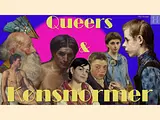
Learning programme
The word queer originally meant ‘strange’ or ‘unusual’.
Once used as a derogatory term for homosexual people, queer has since taken on a much broader meaning. It can describe both an identity and a way of challenging prevailing social norms and ideas about gender and sexuality. It is also used as an umbrella term for people whose gender or identity falls outside conventional norms.
The programme introduces students to the museum’s collection by exploring unexpected and challenging aspects of works by artists associated with the Modern Breakthrough whom we might today describe as queer: Kristian Zahrtmann, Bertha Wegmann, Marie Luplau and Emilie Mundt.
Through discussion and visual analysis, the programme aims to bring these artists and their stories to the attention of a new generation and highlight their importance within our shared Danish history.
.
Practical information
Duration: 45–60 minutes
Group size: Maximum 25 students
Price: DKK 550
Group size: Maximum 25 students
Price: DKK 550
Book a time
Bookings are handled by our partner Gecko. By starting the booking process, you accept that a necessary functional cookie is set to manage your selections. Read Gecko's privacy policy
Your consent applies only to this booking.
Read our cookie and privacy policy
Read our cookie and privacy policy
You can also call our booking team on +45 35 44 09 51.